
FEEDOO

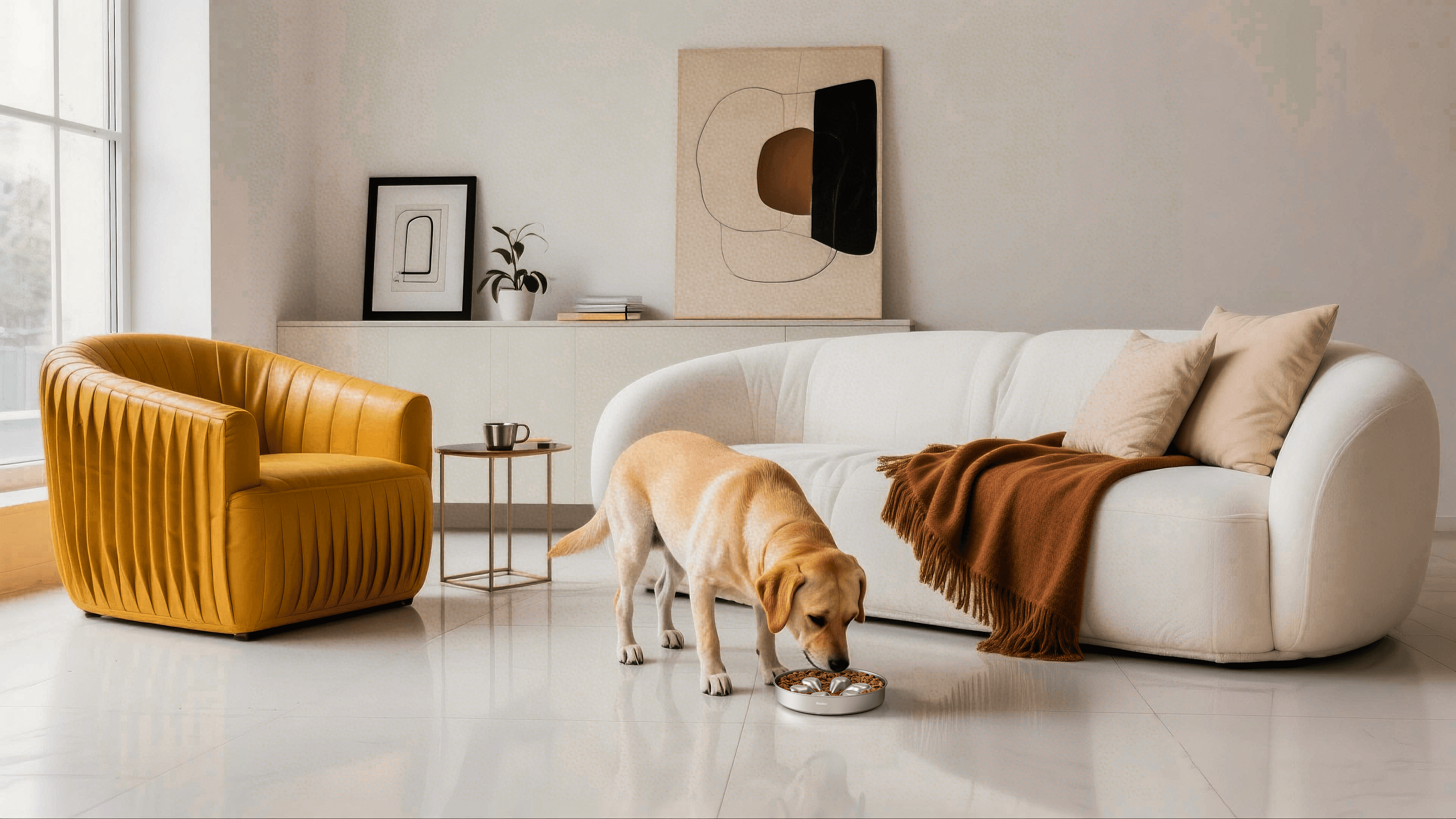
A slow feeder that has helped 200,000+ dogs eat more safely.

A slow feeder that has helped 200,000+ dogs eat more safely.

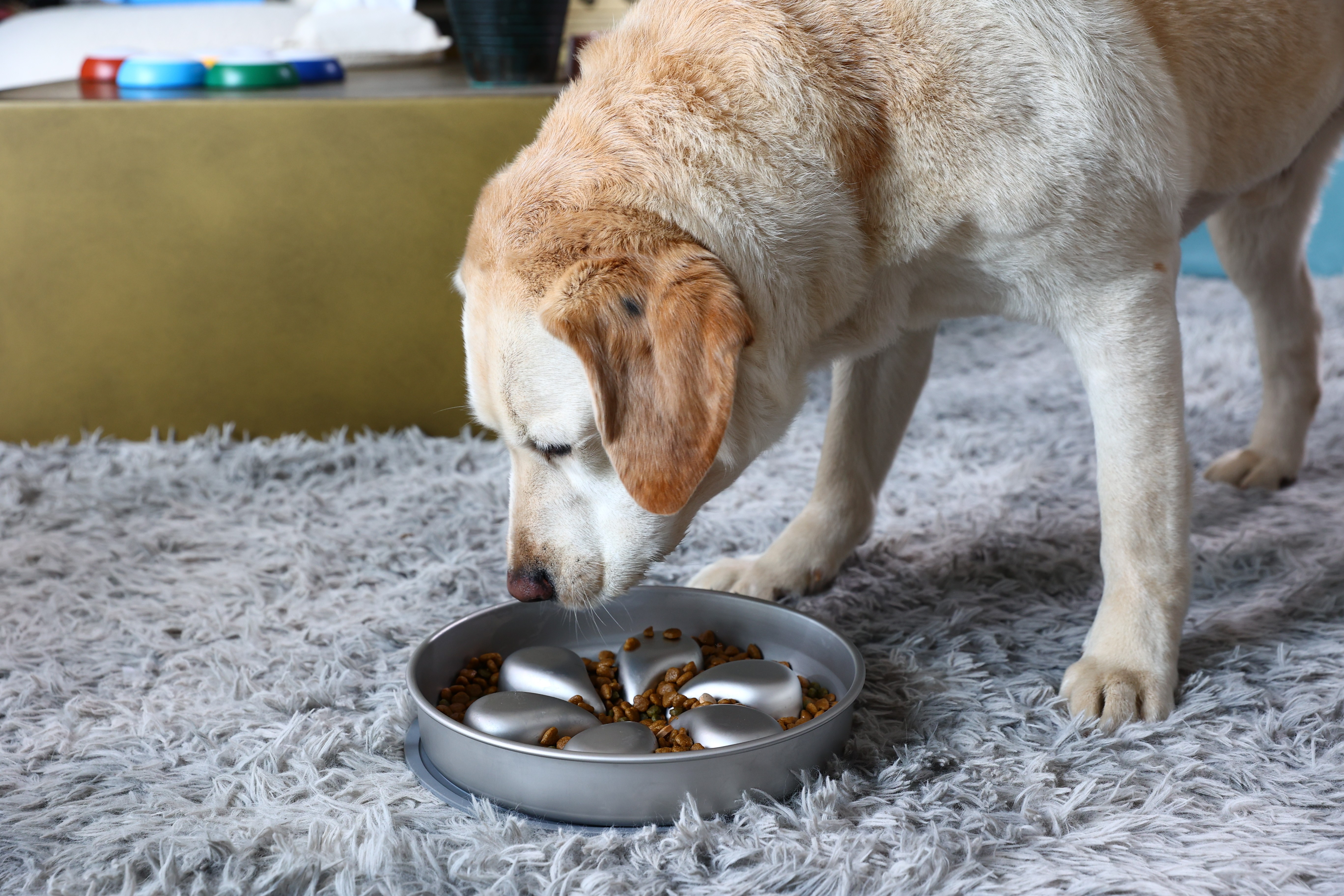
Feedoo started as a personal project that I worked on end-to-end, taking it from initial concept all the way to launching on the market, where thousands of people are using it today.

Feedoo started as a personal project that I worked on end-to-end, taking it from initial concept all the way to launching on the market, where thousands of people are using it today.

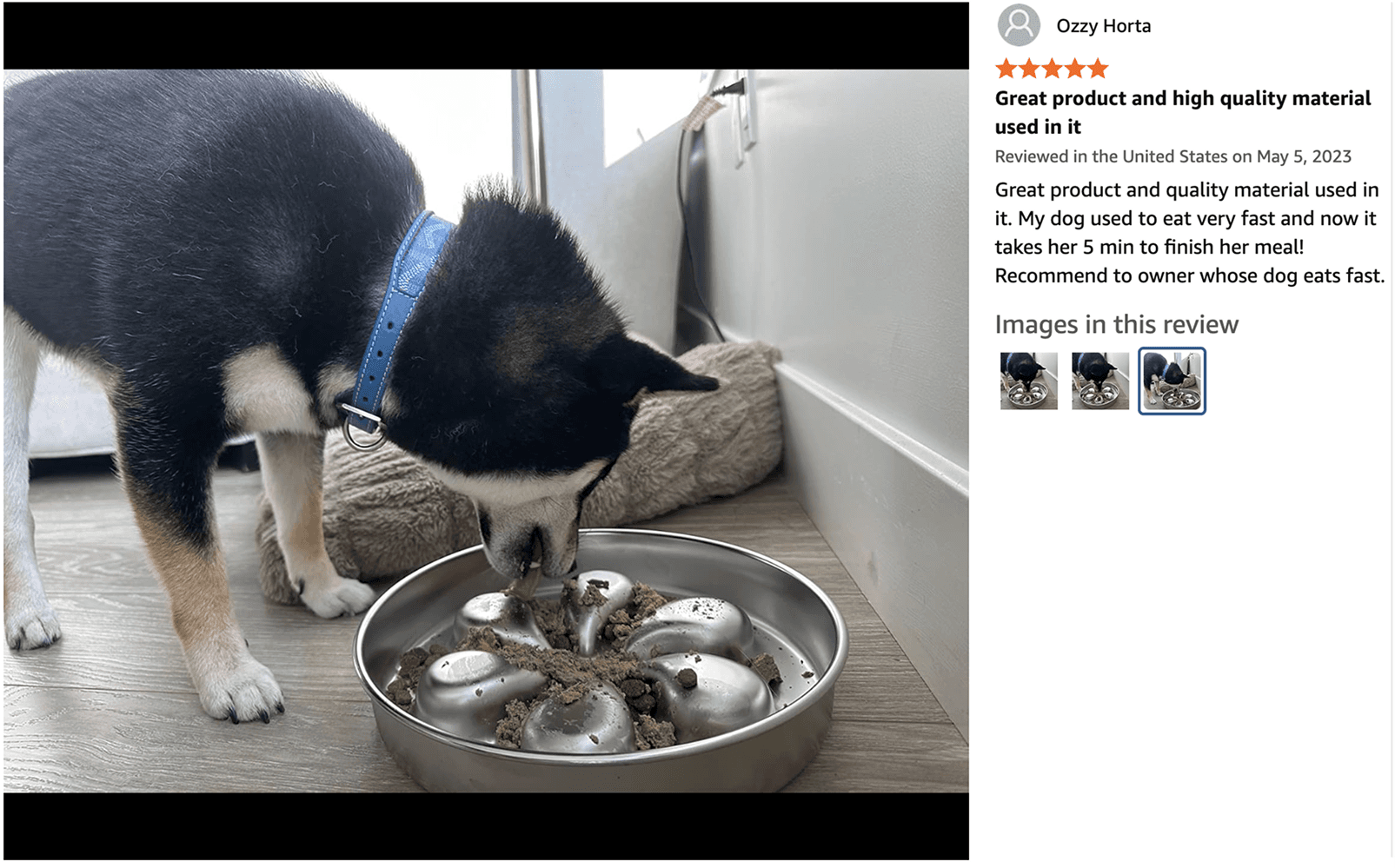
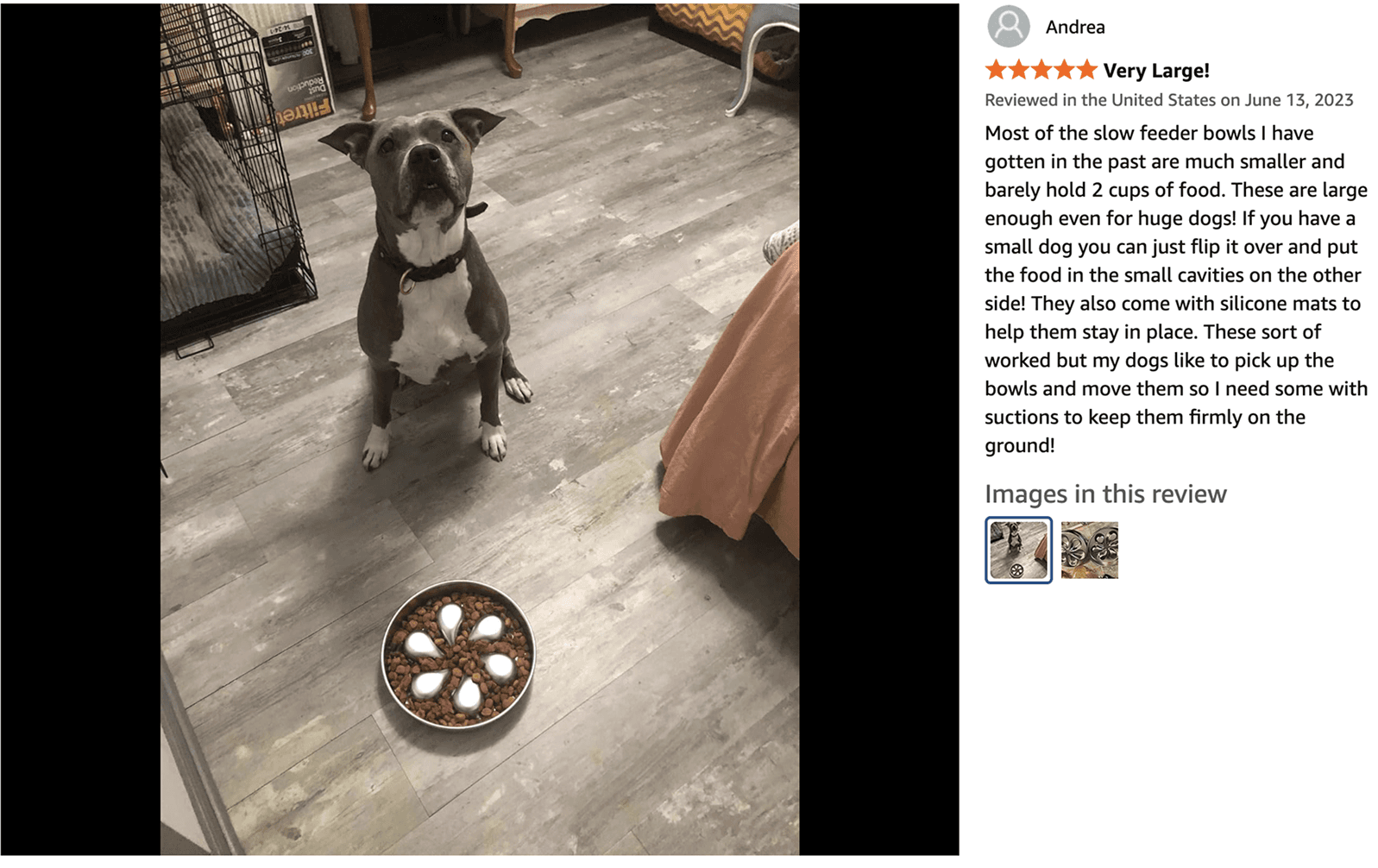
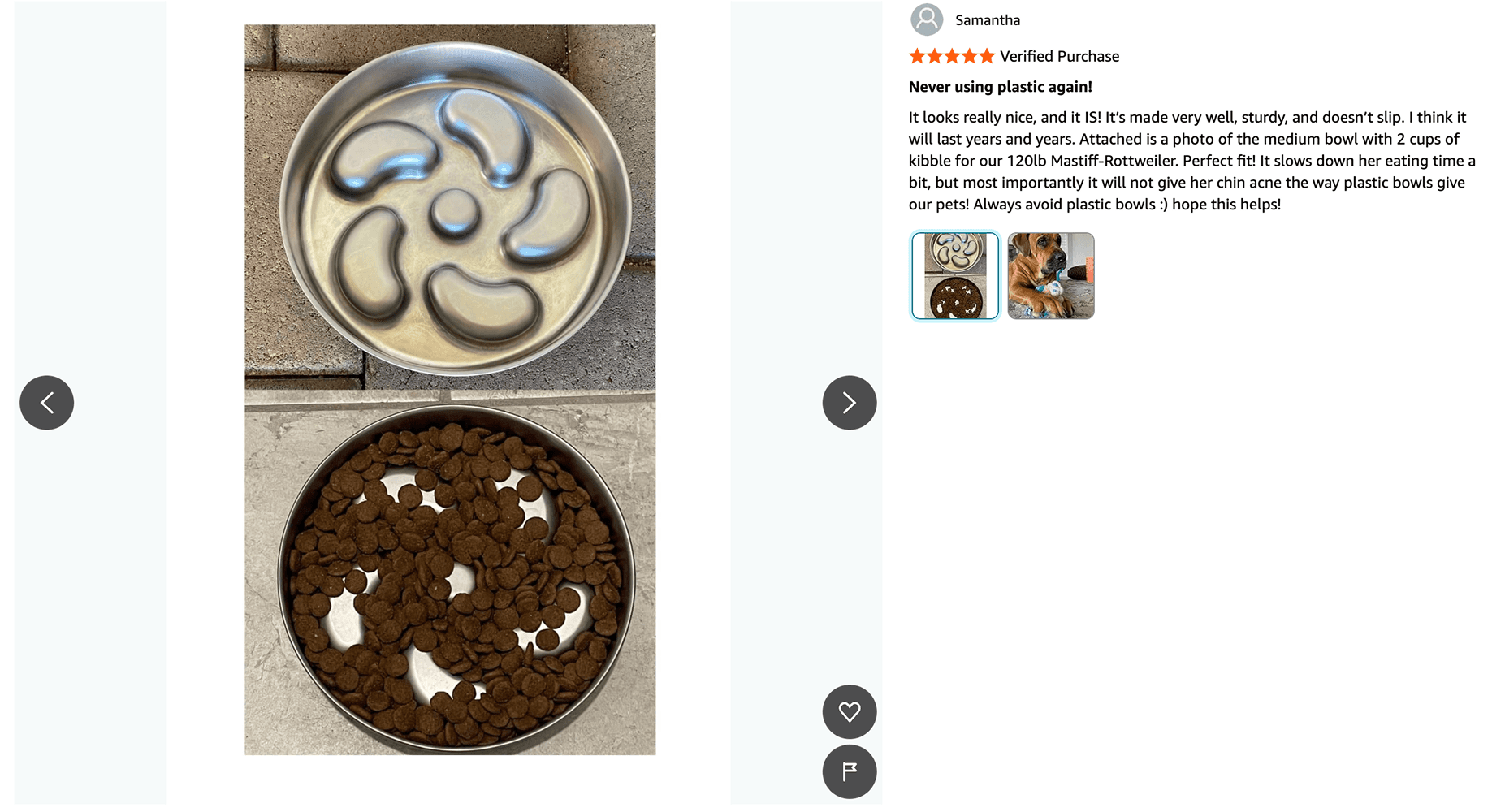
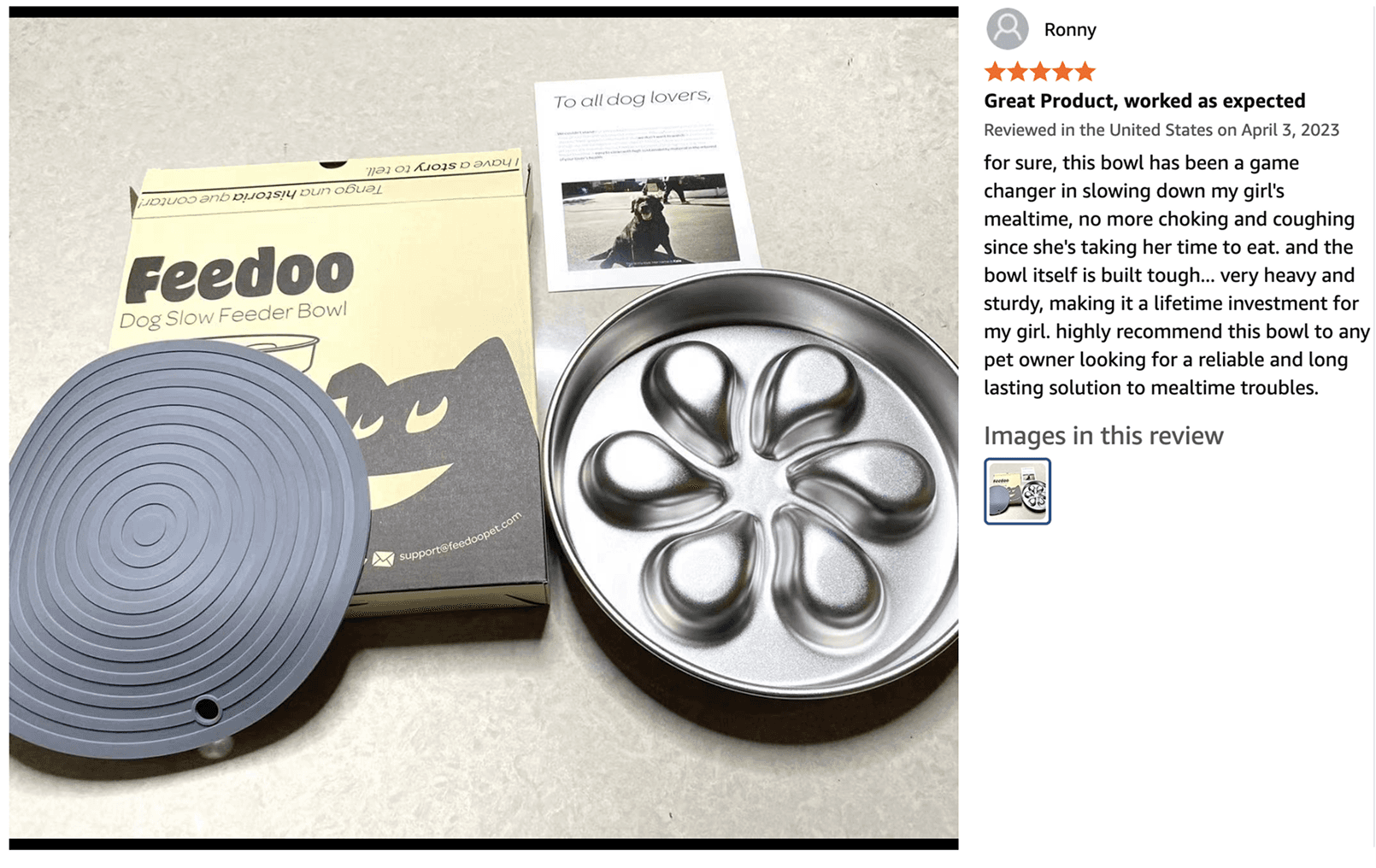
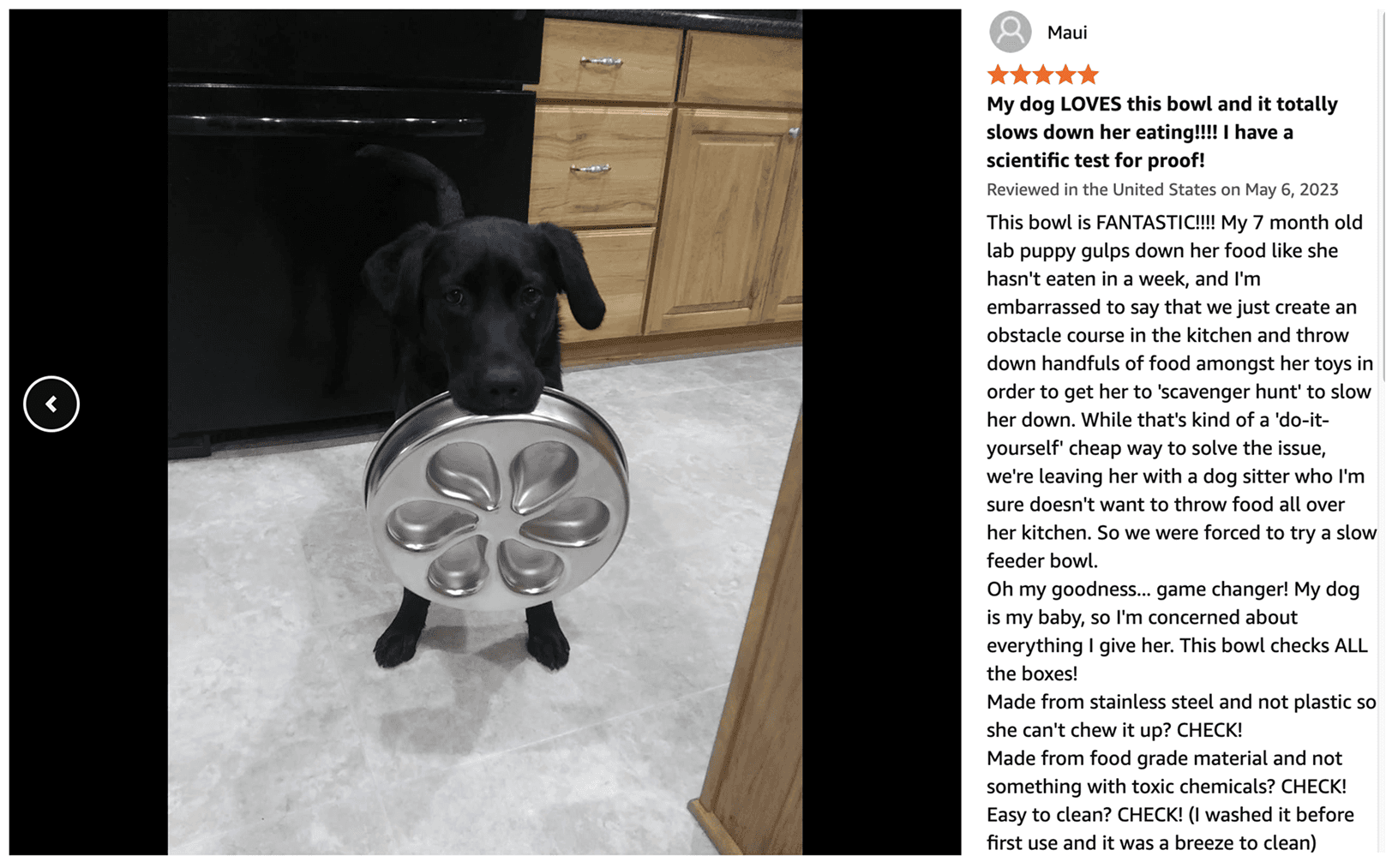
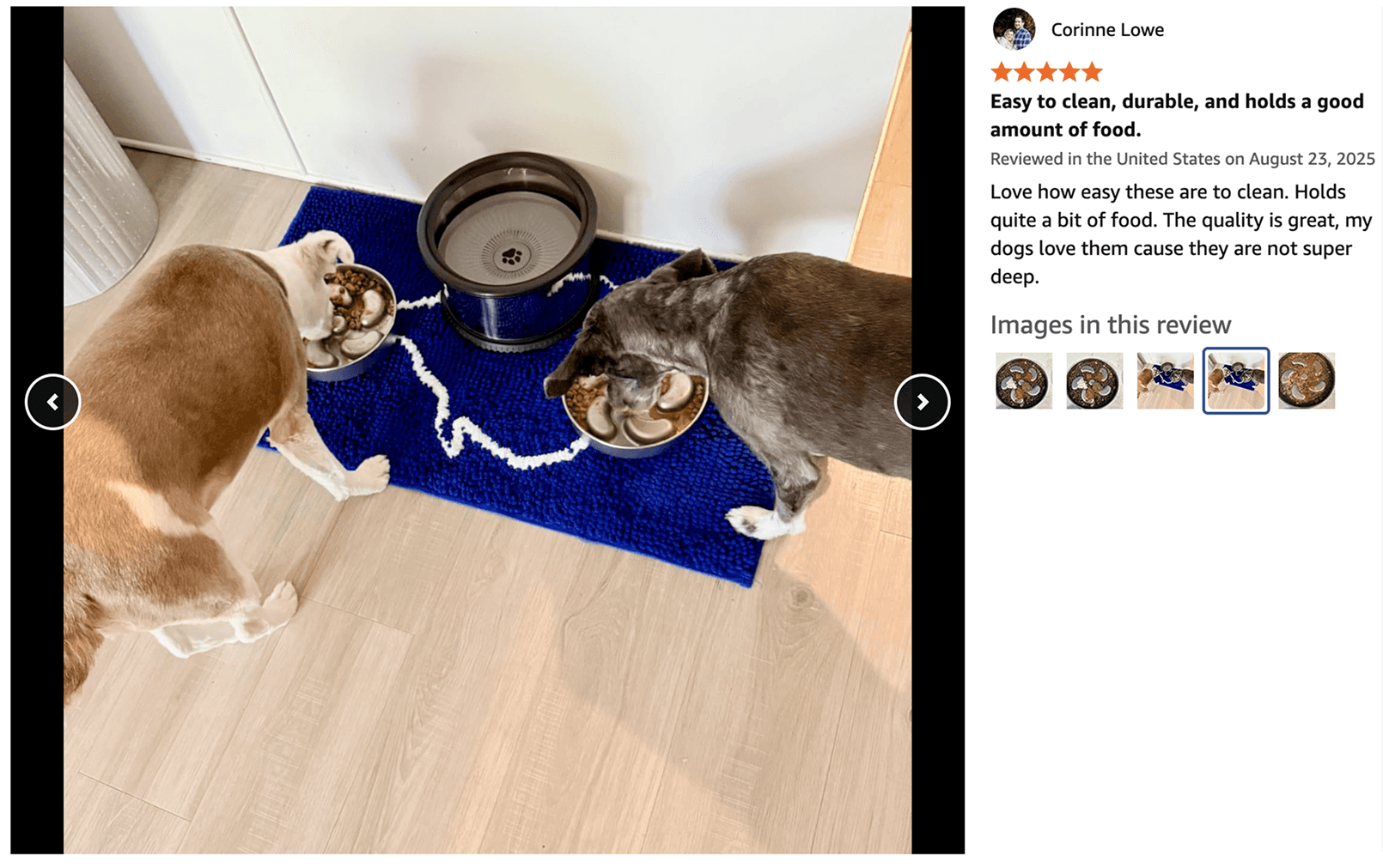
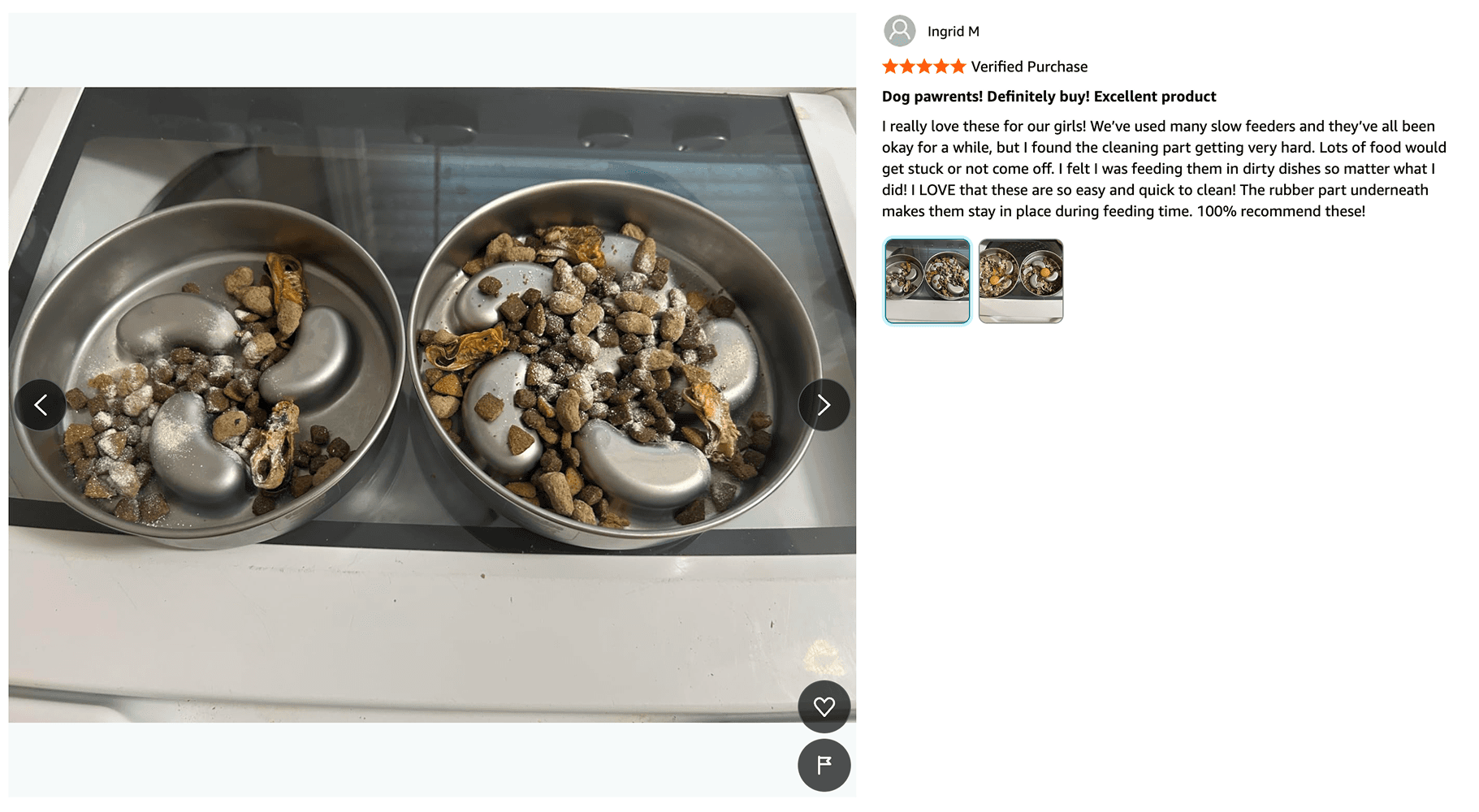
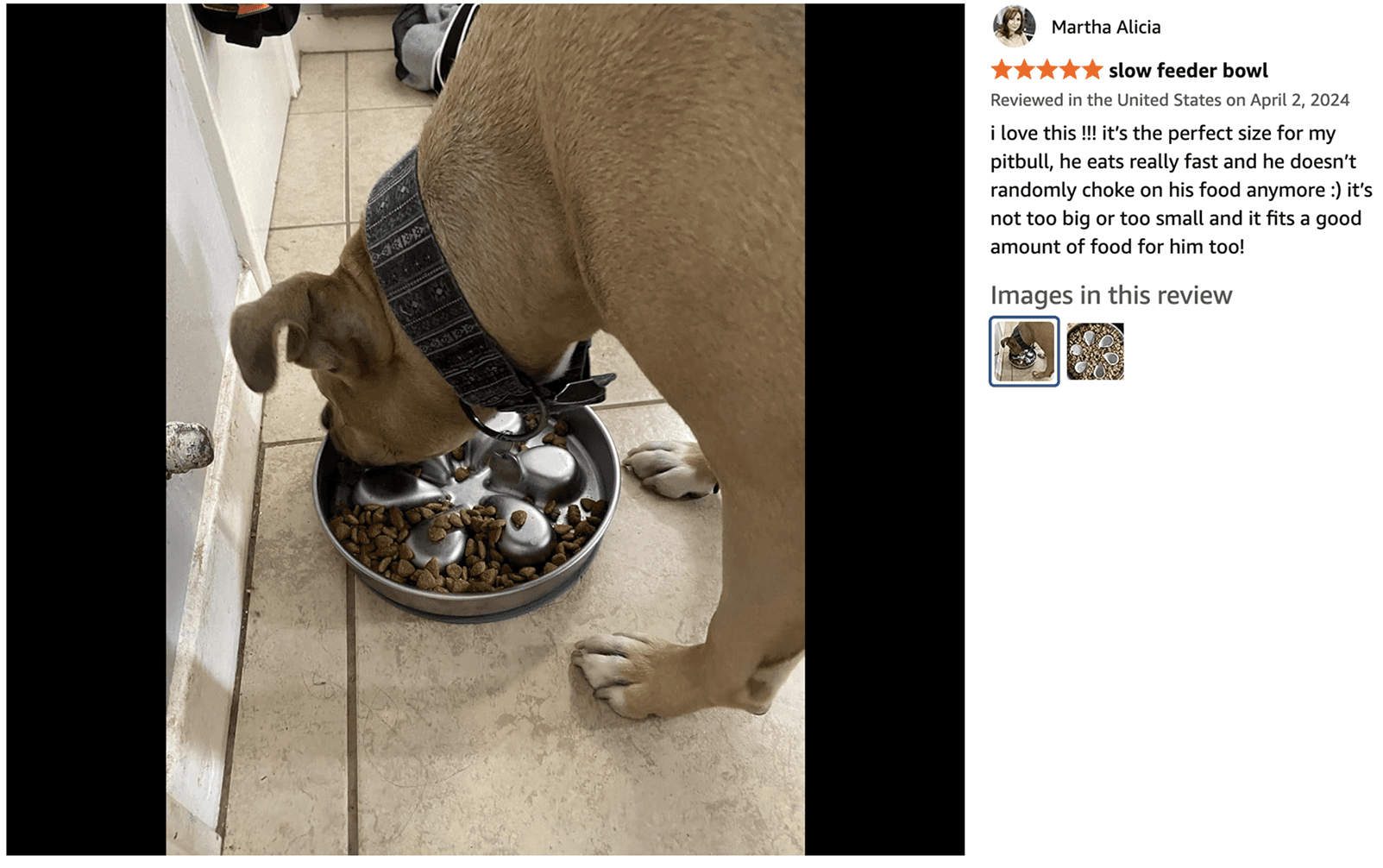
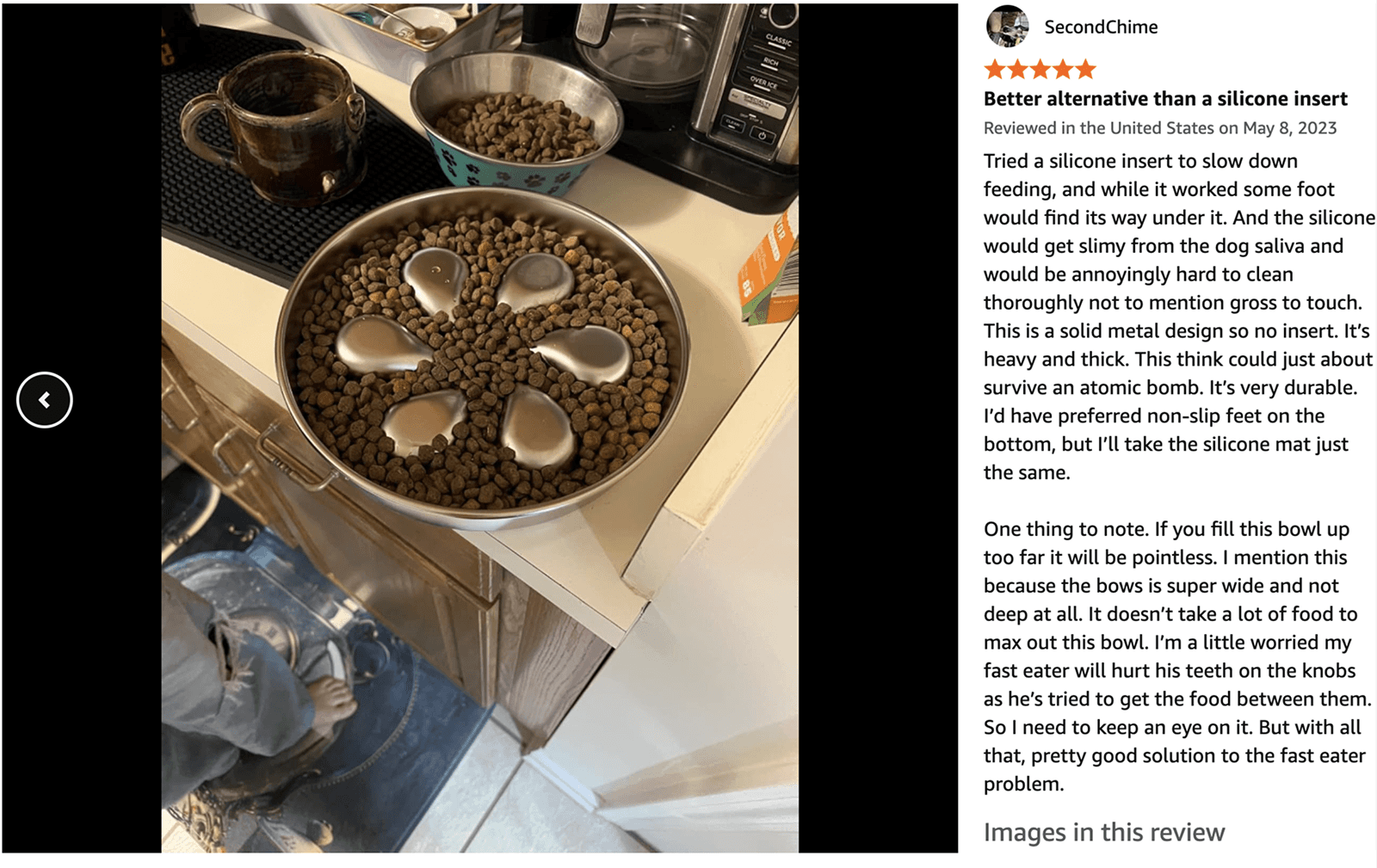
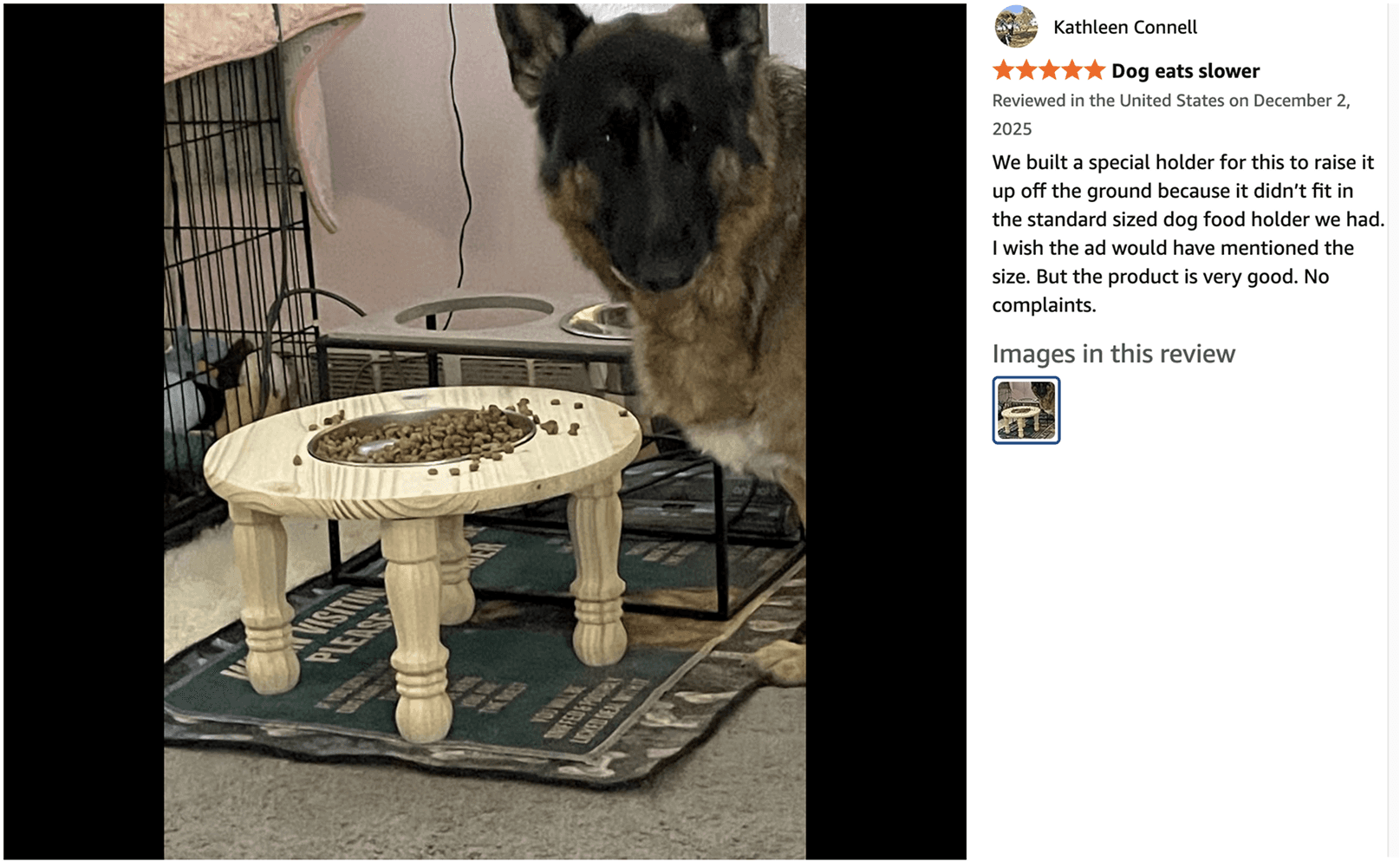
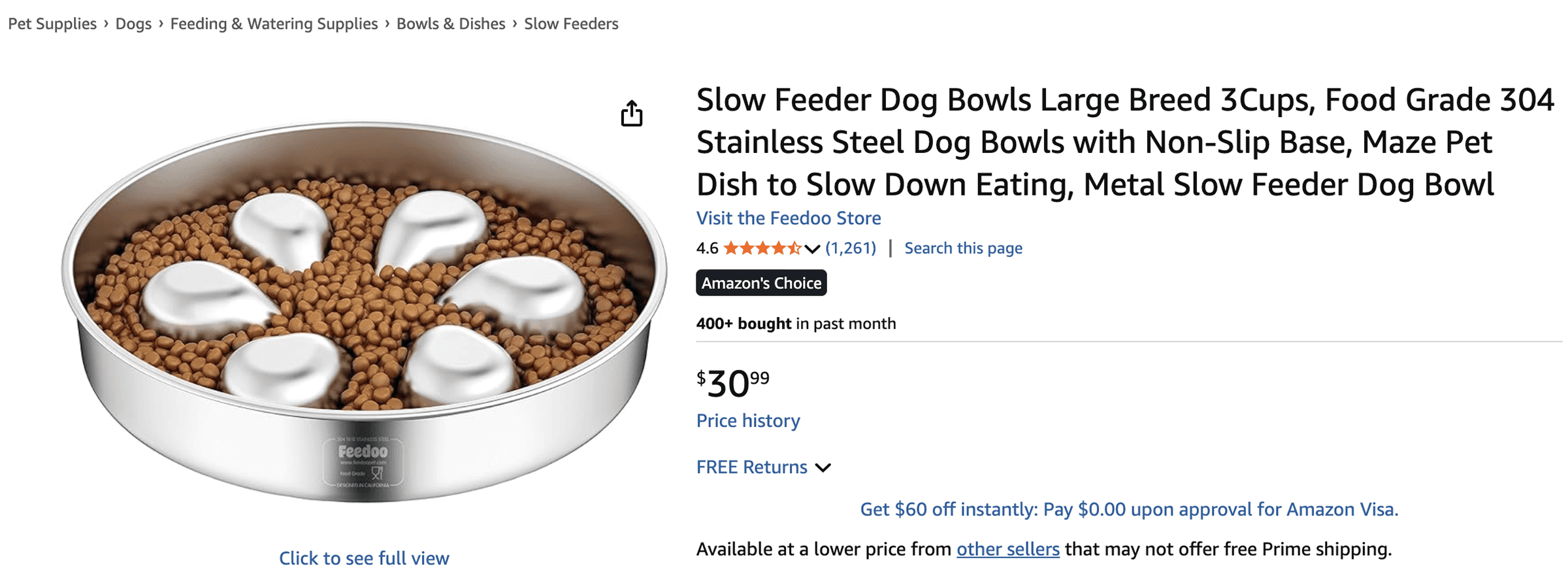
To date, Feedoo has sold over 200,000 units and received over 2,000 reviews, averaging 4.6 stars. And all those great reviews really helped us to improve our next generation of products.

To date, Feedoo has sold over 200,000 units and received over 2,000 reviews, averaging 4.6 stars. And all those great reviews really helped us to improve our next generation of products.

The origin

I wanted to come up with a solution so this doesn’t happen to anybody else again.

I wanted to come up with a solution so this doesn’t happen to anybody else again.

For Kala

For Kala

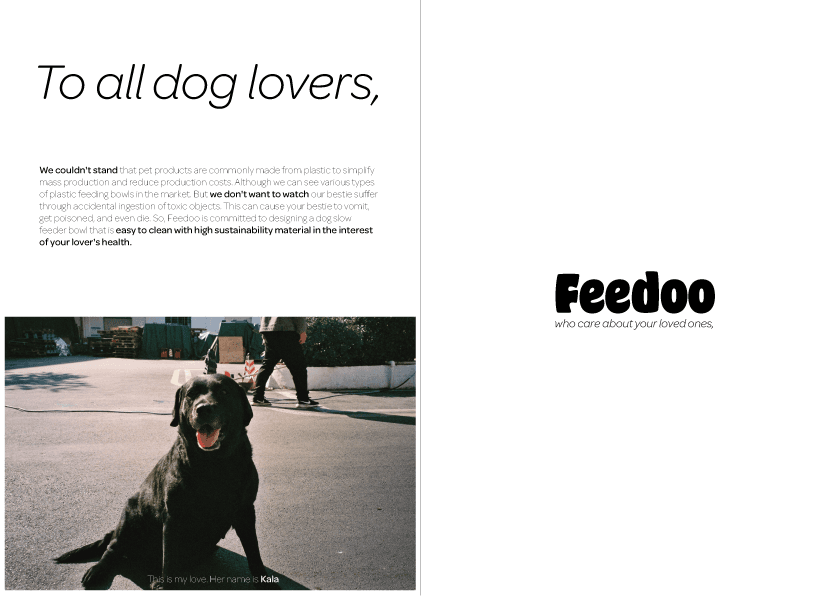
Feedoo began after my dog Kala, who had been with me for 12 years, passed away from eating too quickly and too much. I wanted to create a solution that could help prevent this from happening to other dogs.

Feedoo began after my dog Kala, who had been with me for 12 years, passed away from eating too quickly and too much. I wanted to create a solution that could help prevent this from happening to other dogs.

Market gap / problem

A real need existed, but the category was full of weak solutions.

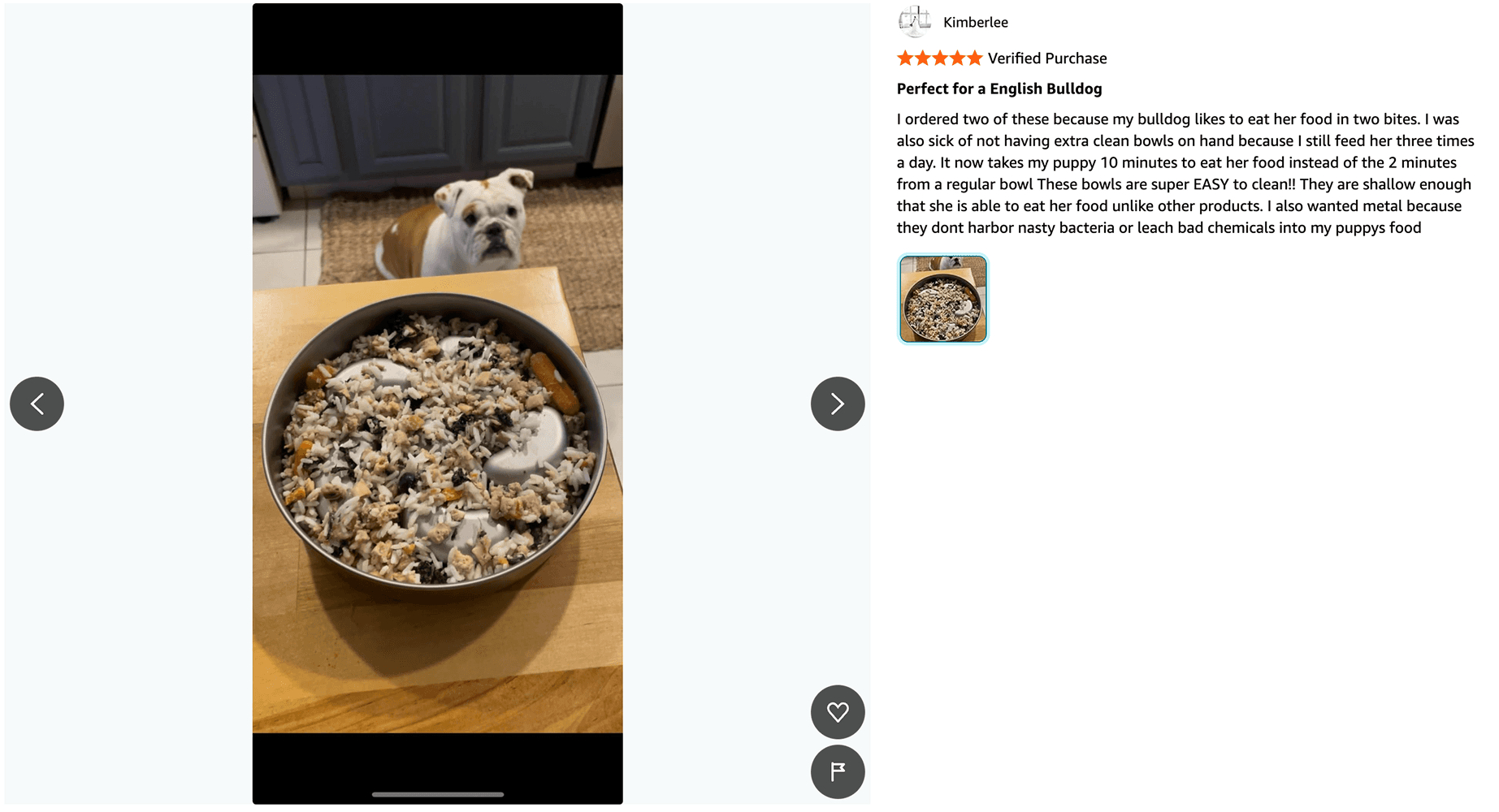
When I started researching the market, I found that slow feeders were already widely sold — and widely criticized. Thousands of Amazon reviews pointed to the same issues: poor materials, hard-to-clean forms, weak durability, and products that didn’t feel trustworthy for everyday use. The category clearly had demand, but it lacked a product that truly solved the problem well.
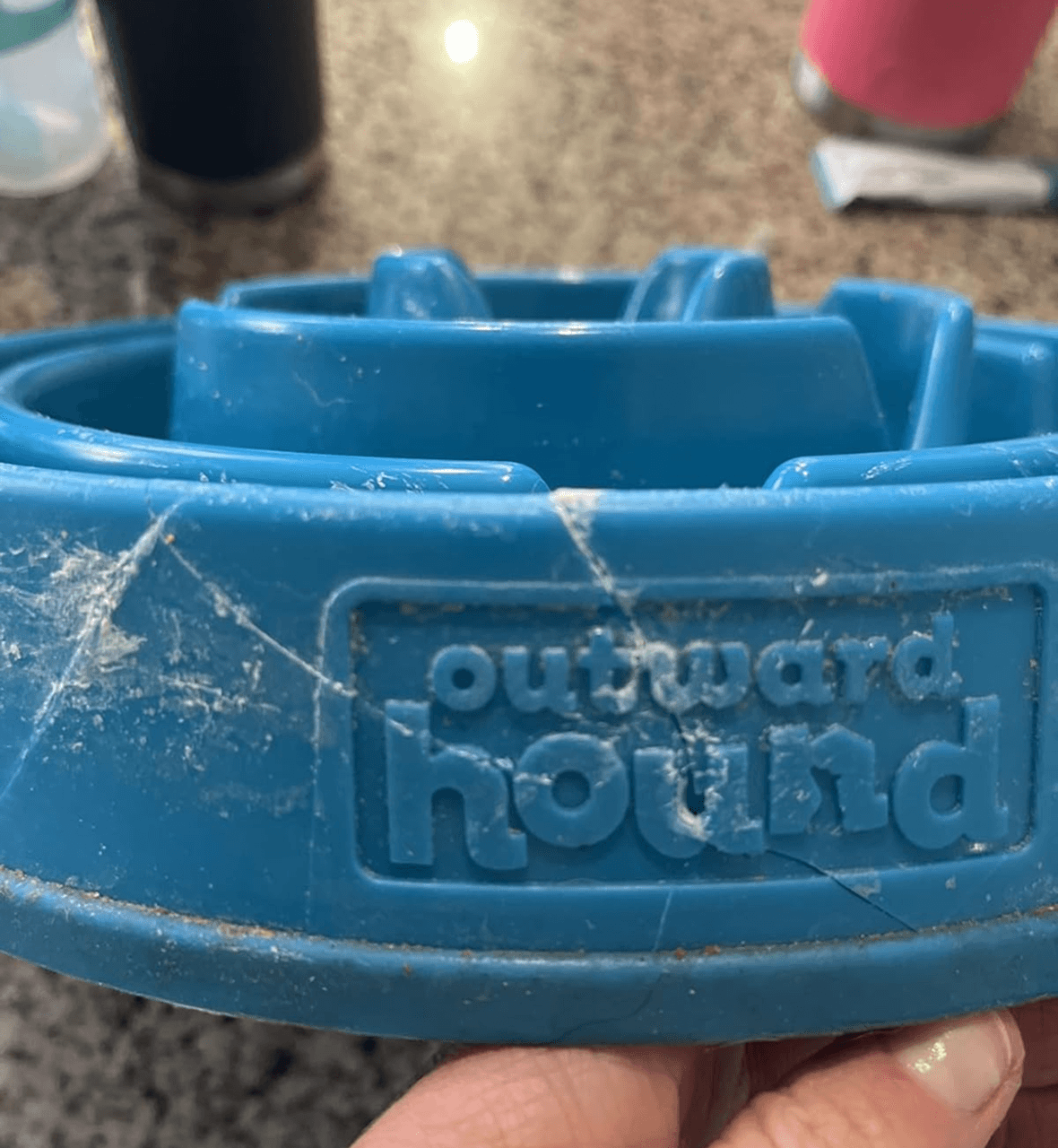
Plastic is cheaper to manufacture and easy to shape, but it does not age well over time.
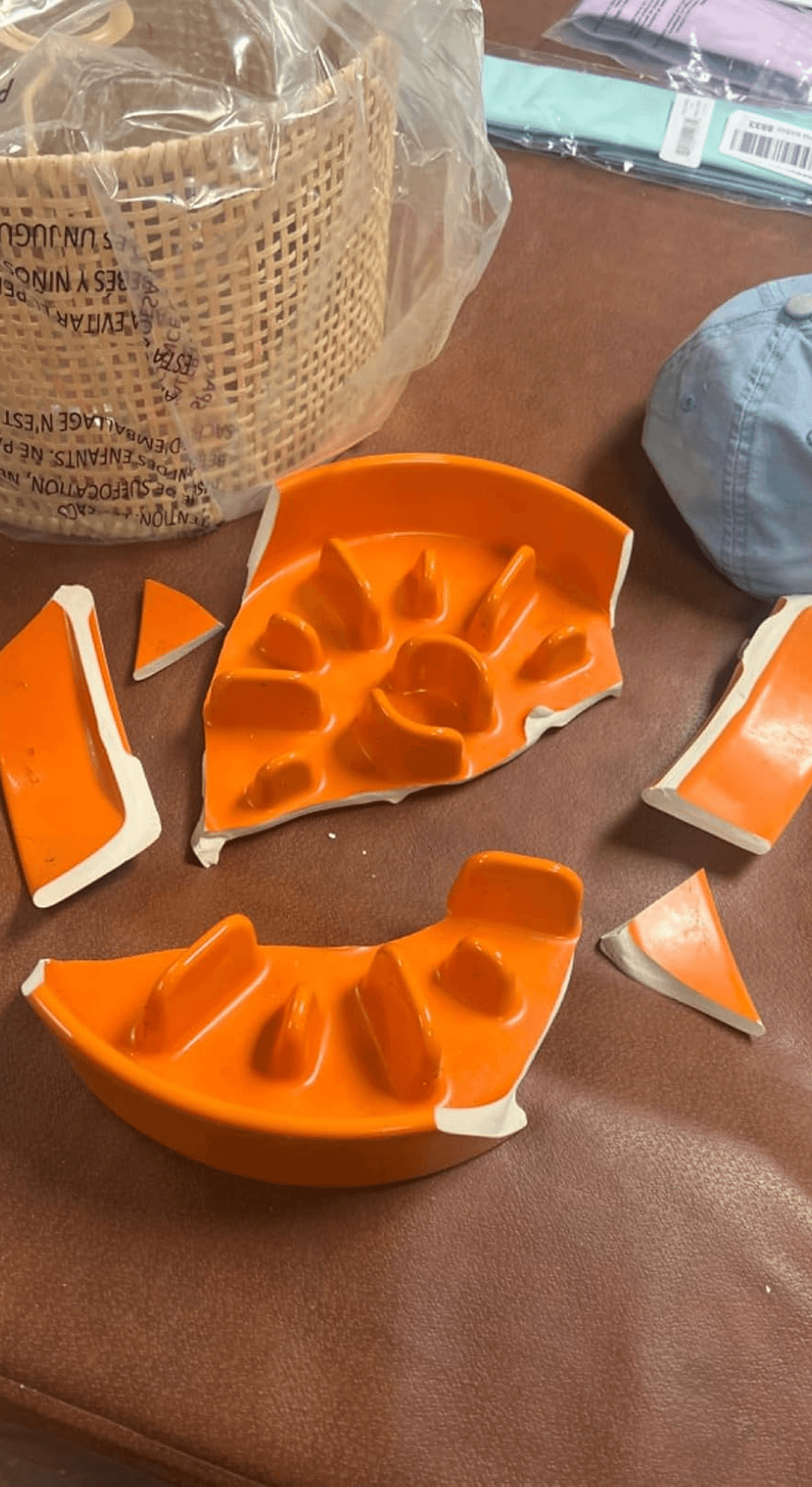
Ceramic is easy to clean and dishwasher-safe, but it is heavy, fragile, and expensive to ship.
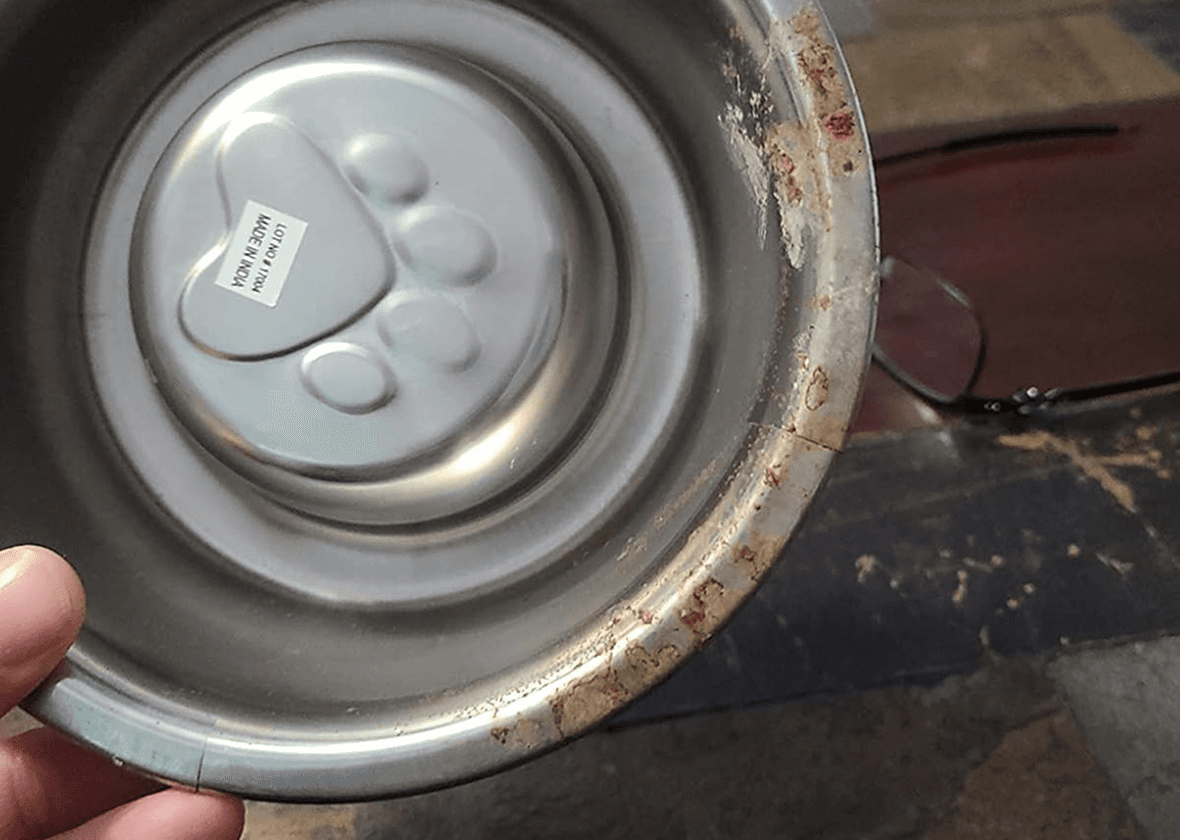
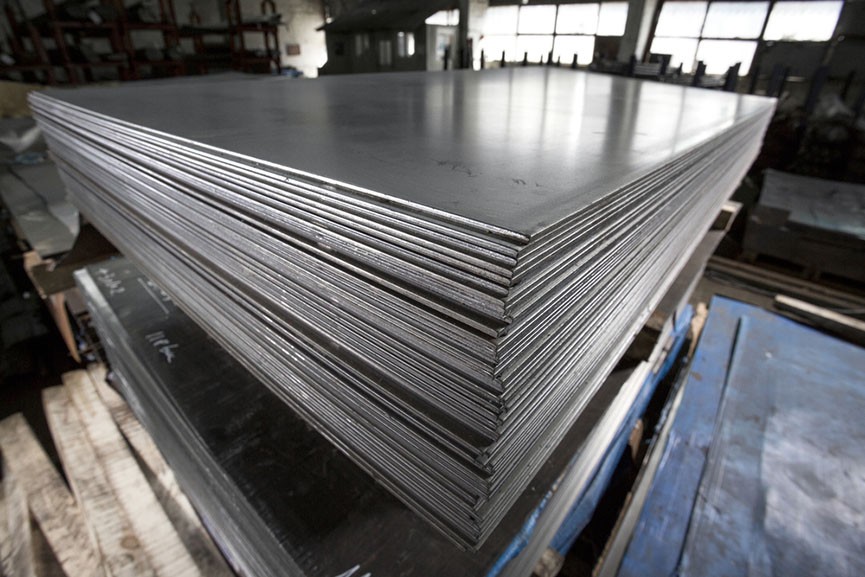
Metal is more expensive and harder to manufacture, but it lasts longer and better supports daily use.

Validating the problem at scale

Bad reviews = Real user demand

Bad reviews = Real user demand

There were thousands of mixed reviews on Amazon, so I knew this product had scale potential. But there wasn’t a product that truly solved the problem and was made from high-quality materials that I would be proud to give to my own dog for daily use.

There were thousands of mixed reviews on Amazon, so I knew this product had scale potential. But there wasn’t a product that truly solved the problem and was made from high-quality materials that I would be proud to give to my own dog for daily use.

Is it possible to make a product that truly solves the problem?

Is it possible to make a product that truly solves the problem?

Material choice

The right material had to feel safe, durable, and worth trusting every day.

The right material had to feel safe, durable, and worth trusting every day.

What material would be best for our four-legged family members?

Regarding the materials, we went deep into the question of what might be the best option to use for our 4 legged family member. Based on the secondary market feedback research.


we understand that what users really need is a material that’s durable and healthy for their pet.

Regarding the materials, we went deep into the question of what might be the best option to use for our 4 legged family member. Based on the secondary market feedback research.


we understand that what users really need is a material that’s durable and healthy for their pet.

Prototyping and testing

We designed the eating experience through iteration, not assumption.

We designed the eating experience through iteration, not assumption.

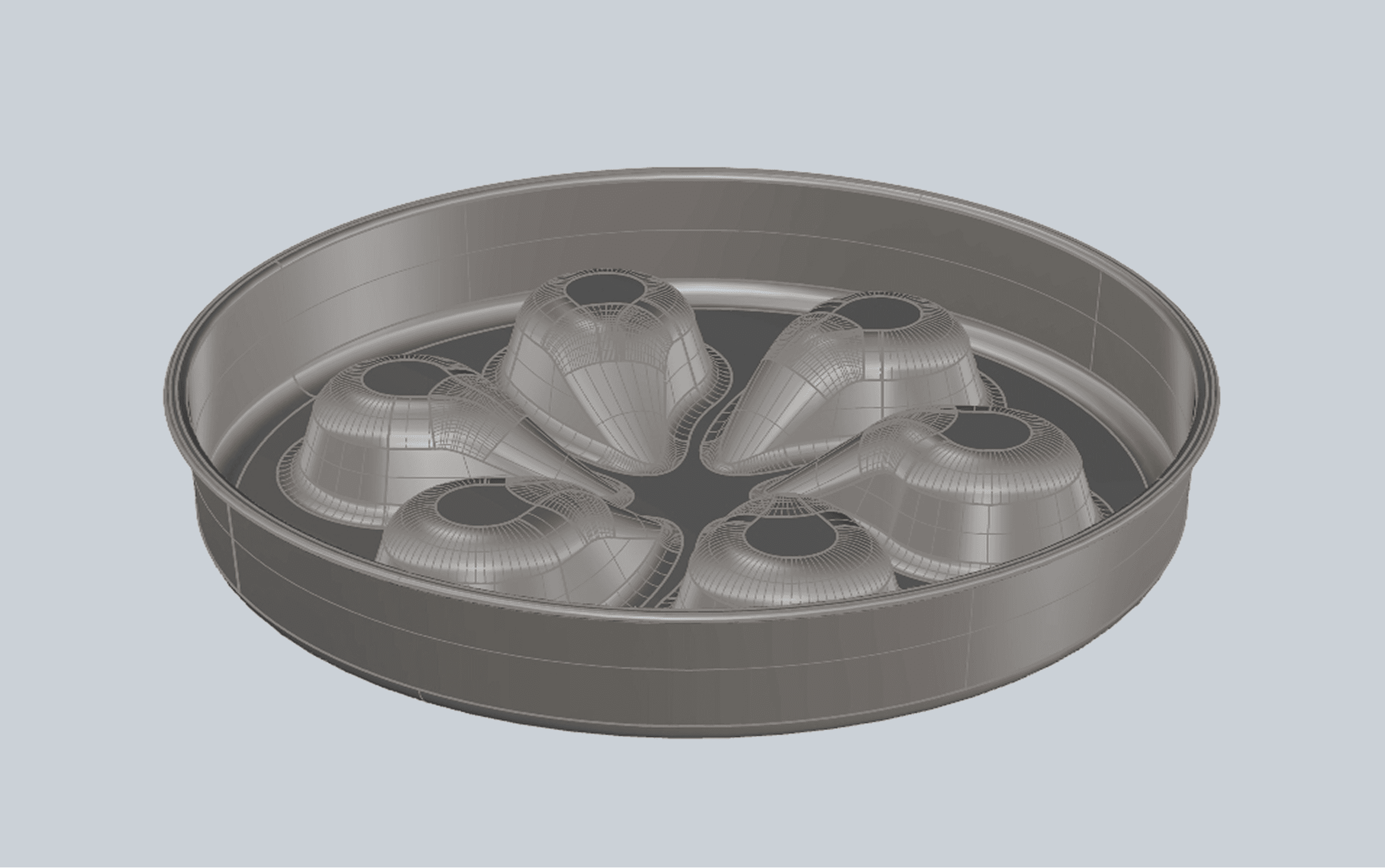
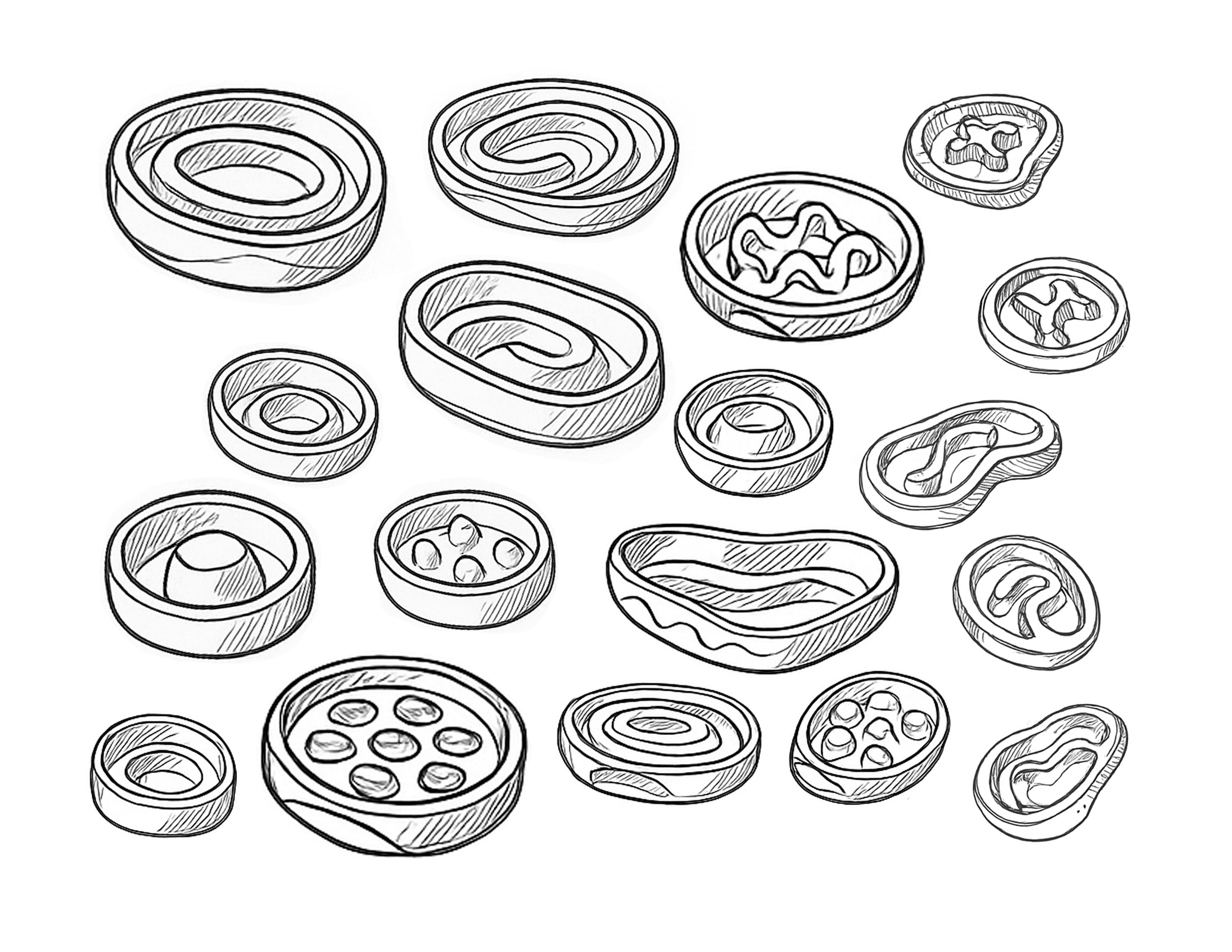
Choosing stainless steel also introduced manufacturing constraints, so the design had to be developed in a function-driven way. We built multiple prototypes with different internal patterns, tested them with dogs, and observed how each variation affected eating speed, behavior, and usability. Seeing how small design changes influenced mealtime was one of the most revealing parts of the process.

Choosing stainless steel also introduced manufacturing constraints, so the design had to be developed in a function-driven way. We built multiple prototypes with different internal patterns, tested them with dogs, and observed how each variation affected eating speed, behavior, and usability. Seeing how small design changes influenced mealtime was one of the most revealing parts of the process.

What we tested

What we tested

  • Internal ridge shapes

  • Bowl depth and opening size

  • Cleaning usability

  • Eating time differences across dog sizes

  • Internal ridge shapes

  • Bowl depth and opening size

  • Cleaning usability

  • Eating time differences across dog sizes

The trade off

The constraints we accepted became the value users cared about most.

The constraints we accepted became the value users cared about most.

Choosing stainless steel introduced real constraints in cost, manufacturing, and development time. But those tradeoffs created the qualities users valued most: safety, durability, trust, and long-term value.

Choosing stainless steel introduced real constraints in cost, manufacturing, and development time. But those tradeoffs created the qualities users valued most: safety, durability, trust, and long-term value.

Brand and packaging

Extending trust through brand and packaging

Extending trust through brand and packaging

The same values that shaped the product — trust, clarity, and care — also shaped how Feedoo was introduced to pet owners.

The same values that shaped the product — trust, clarity, and care — also shaped how Feedoo was introduced to pet owners.

The package

The package

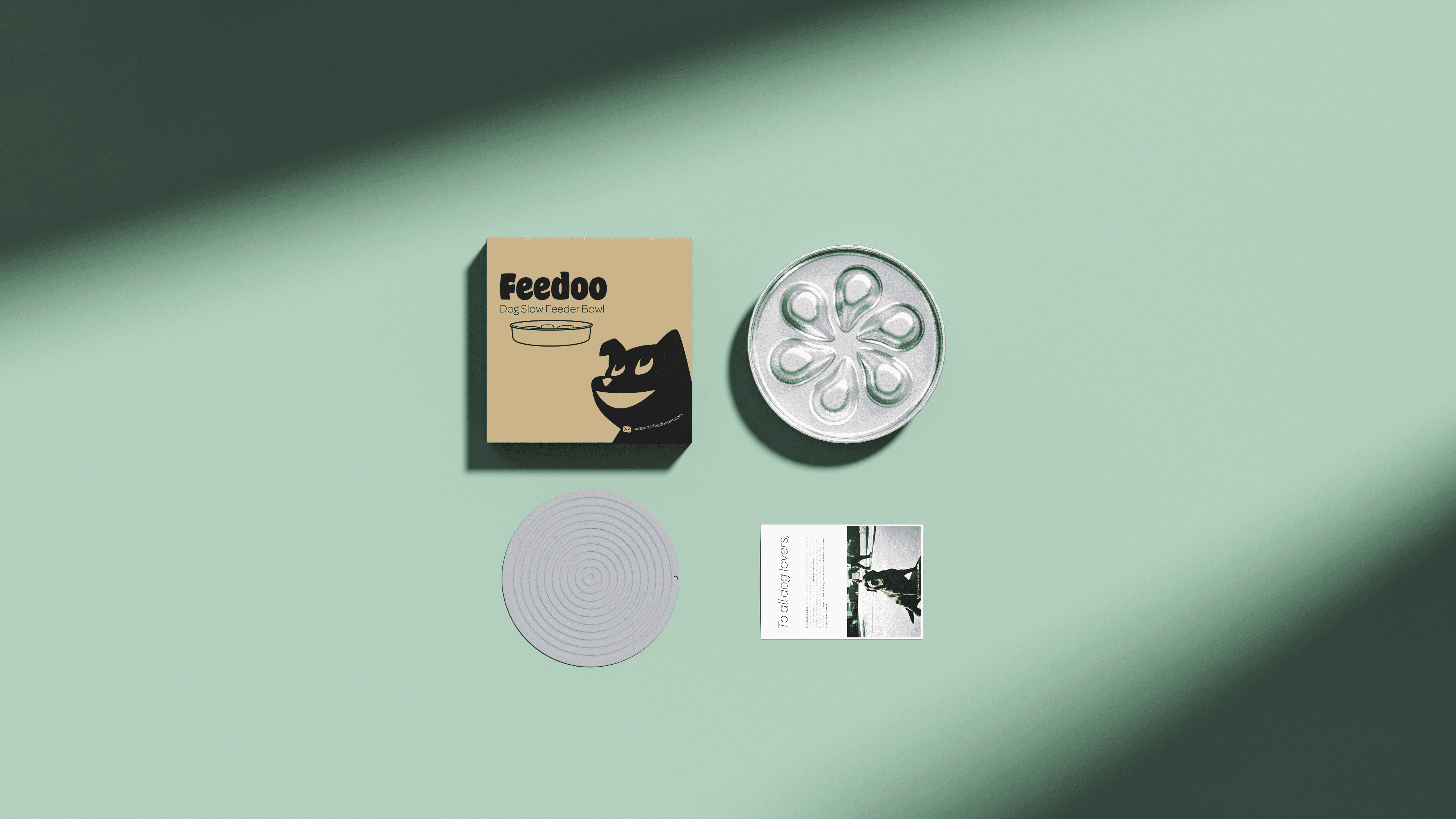
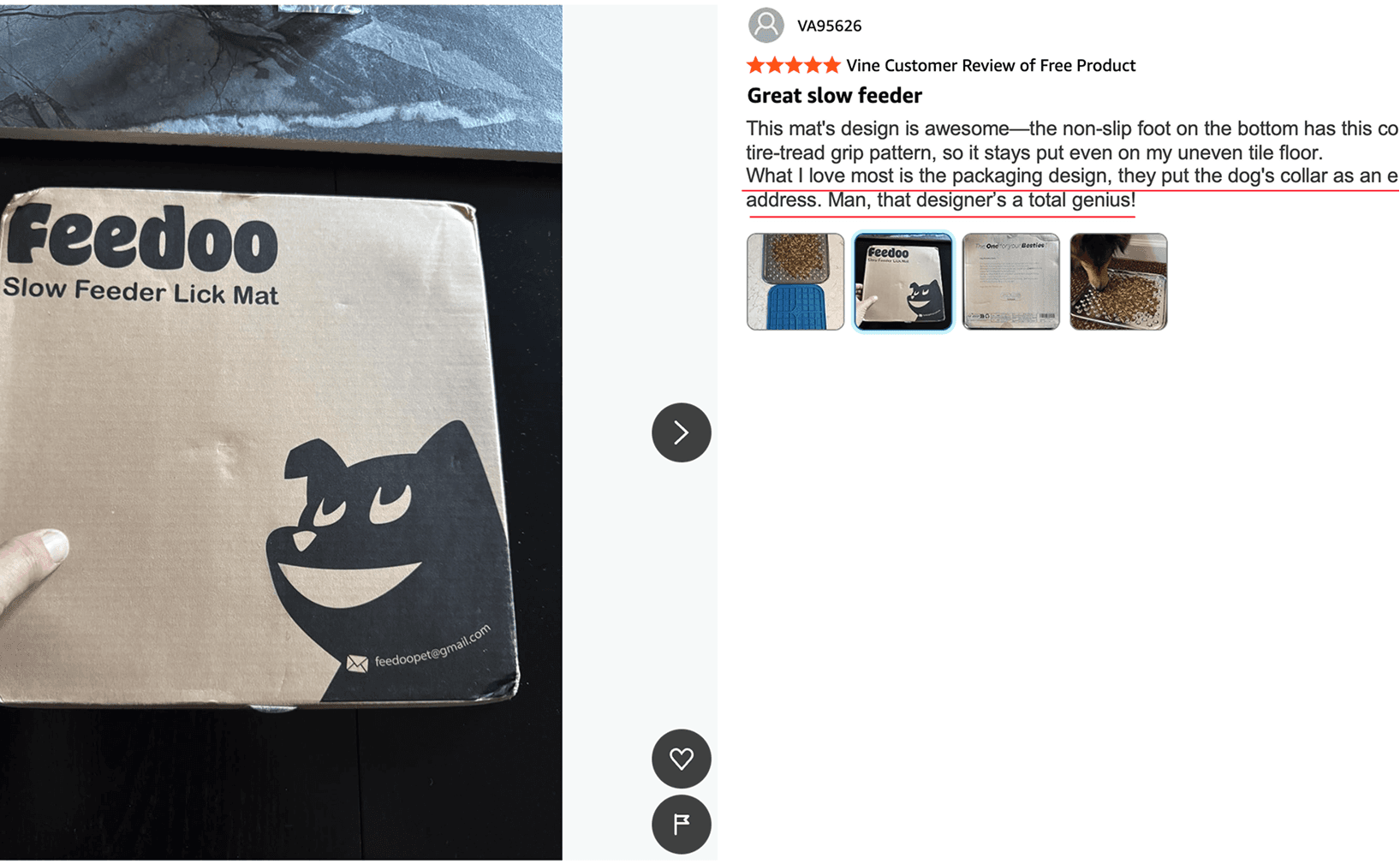
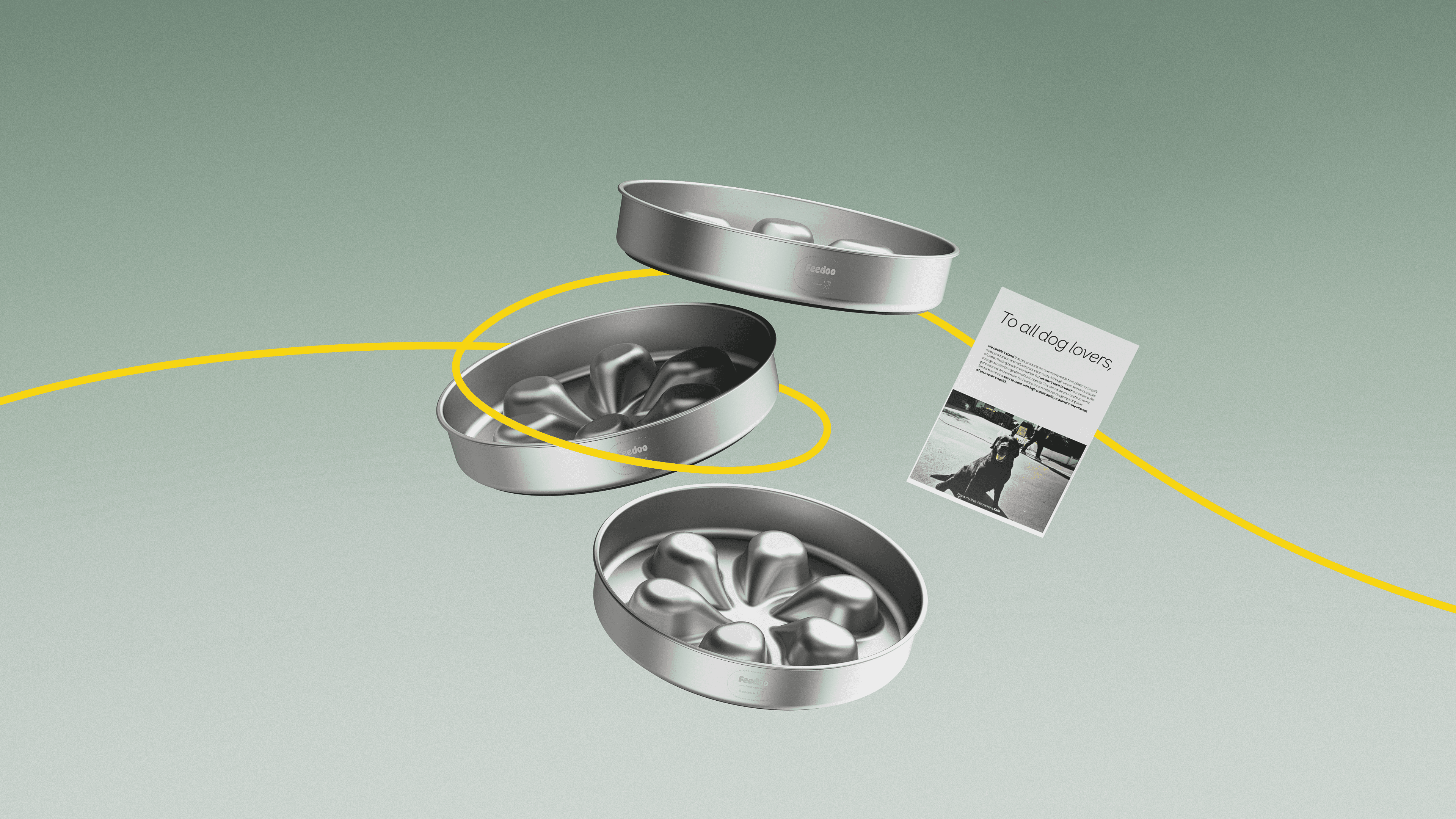
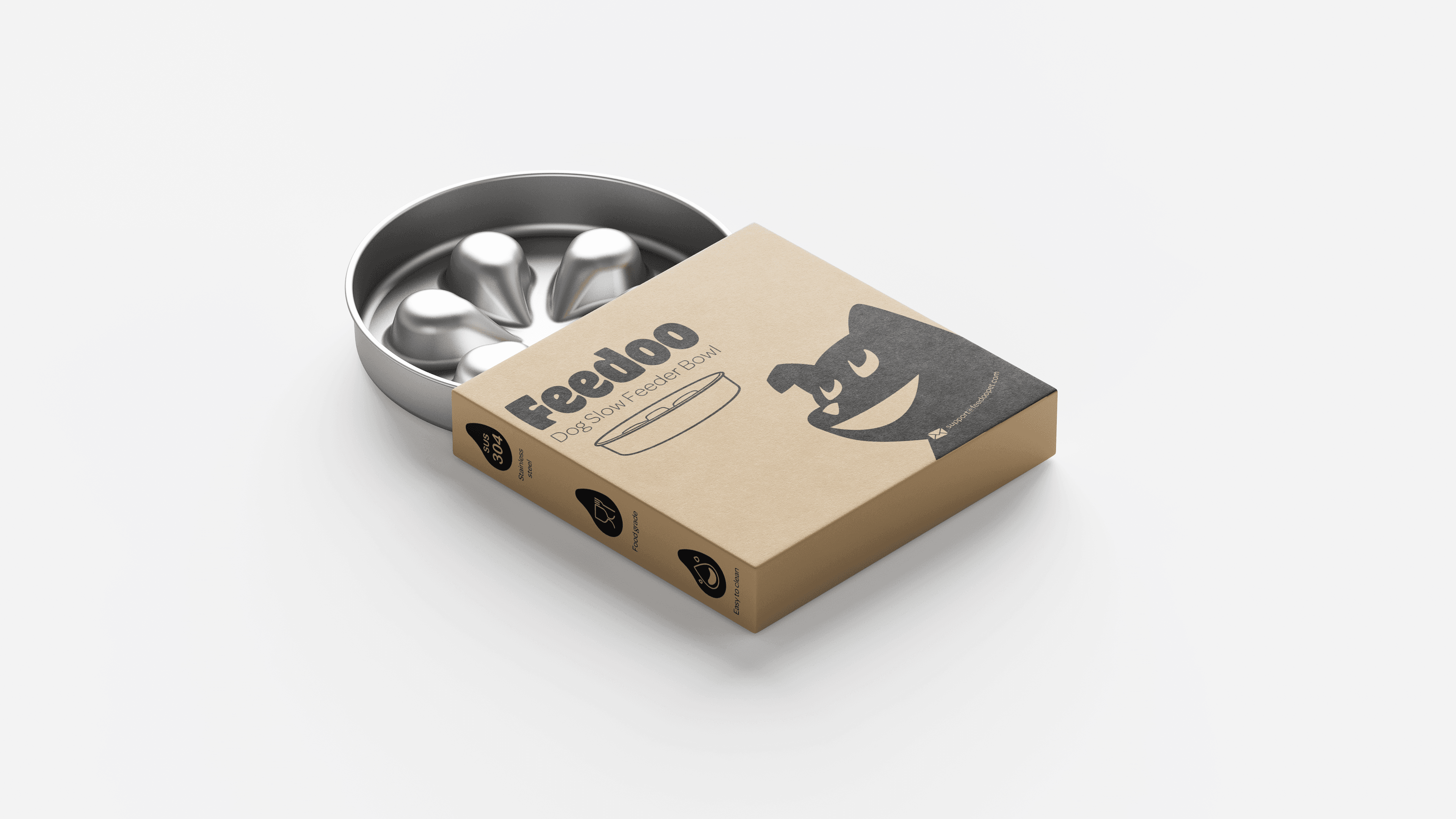
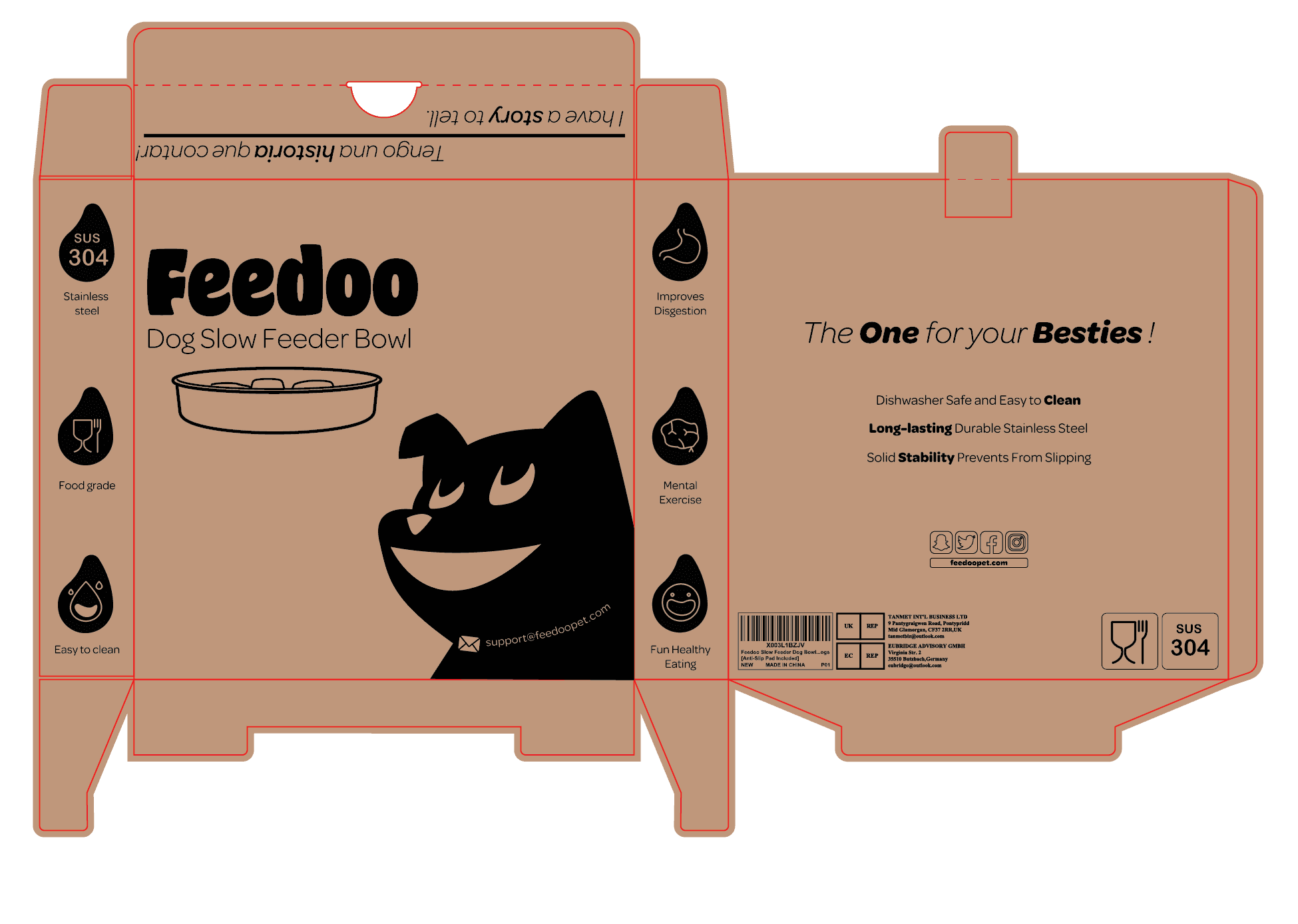
The packaging was designed to feel friendly, trustworthy, and clear. Kala’s illustrated character helped make the box feel more familiar and emotionally warm, while the side graphics echoed the bowl’s internal geometry to create a cohesive visual language. Recyclable paperboard and single-color printing also helped reduce environmental impact while keeping the system expressive and cost-conscious.
The postcard

The postcard

Inside the box, we included a small postcard as a quiet reminder of why the product exists. Rather than functioning as promotion, it helped frame Feedoo around everyday care — healthier eating habits, safer routines, and closer attention to pet wellbeing. It also became a way to communicate the long-term value behind the product, from material choices to durability.
Outcome & Learning

The market validated what mattered most: trust, quality, and everyday confidence.

The market validated what mattered most: trust, quality, and everyday confidence.

A few months after launch, Feedoo began gaining strong traction. To date, it has sold over 200,000 units and received more than 2,000 reviews, averaging 4.6 stars. More importantly, user feedback helped validate the original hypothesis: there was demand for a slow feeder that felt more trustworthy, better made, and more effective in everyday use.

A few months after launch, Feedoo began gaining strong traction. To date, it has sold over 200,000 units and received more than 2,000 reviews, averaging 4.6 stars. More importantly, user feedback helped validate the original hypothesis: there was demand for a slow feeder that felt more trustworthy, better made, and more effective in everyday use.

What surprised me

What surprised me

What surprised me most was how strongly users responded to material quality and trust. The product was not just about slowing dogs down — it was about giving owners more confidence in something they use every day for a family member.